Atomic Magic: How 20-Something Scientists Are Hacking Solar Power with Perovskites
Picture this: a super-thin, bendy film that sucks up sunlight like a sponge and pumps out electricity almost as well as those heavy, expensive silicon panels—but costs way less and can stick on your backpack, car, or even windows.
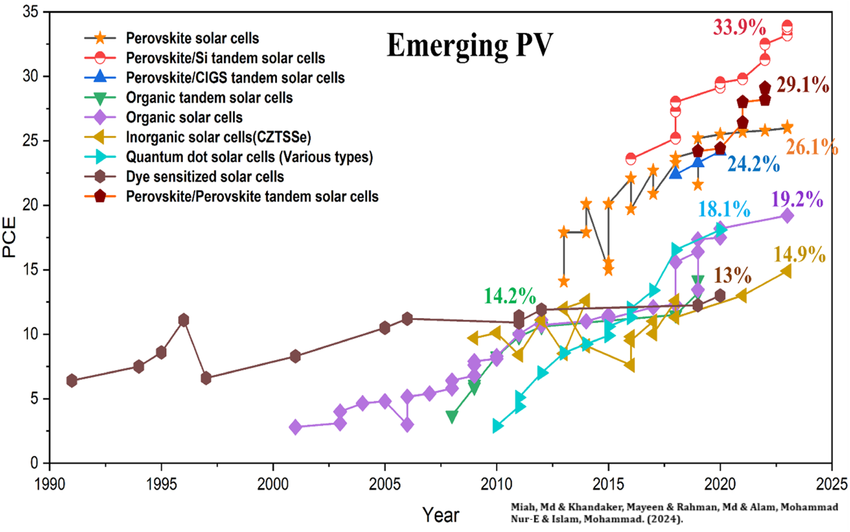
This is the perovskite solar cells. In like 15 years they’ve gone from “meh, 4% efficiency” to smashing past 26% and some lab versions over 34%. The real flex? It’s pure Atomic Engineering. We’re literally re-arranging atoms to bend light, chill out destructive vibrations, and move charges like pros.
Sounds interesting ! Right !!!
Grab a tea ☕ and sit down. We will brake down so it actually makes sense.
The Crystal That Feels Like a Soft Trampoline!
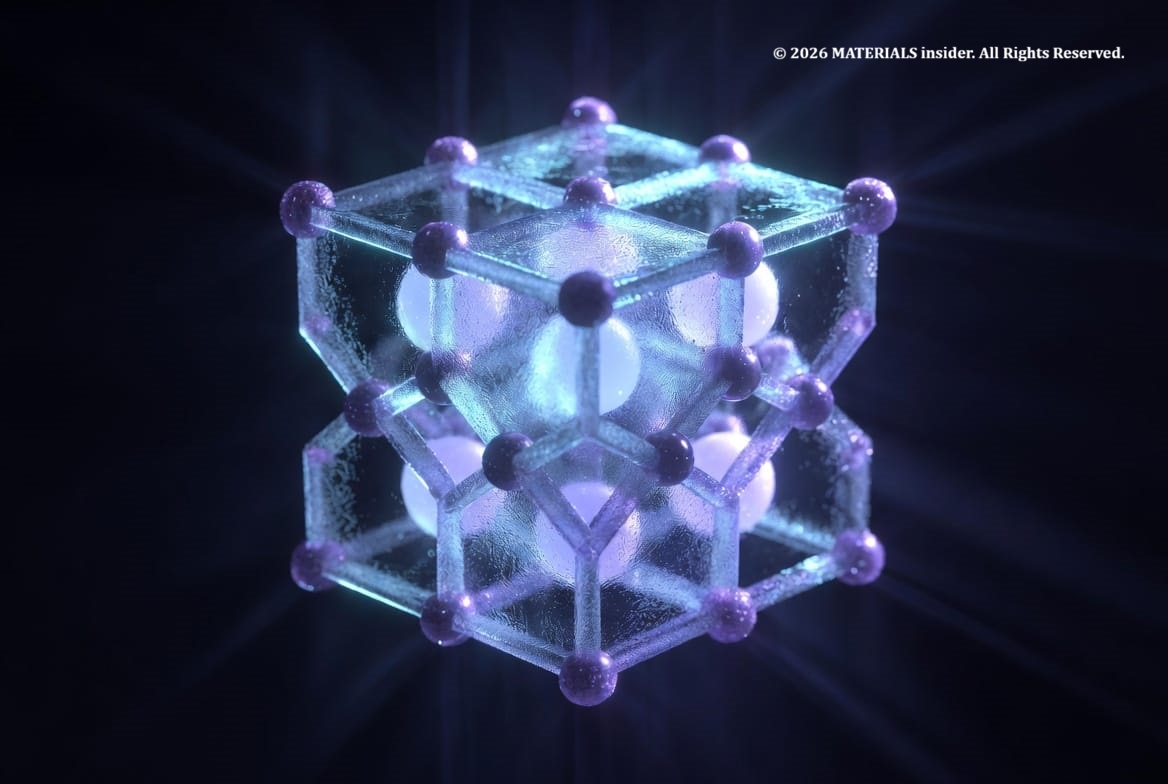
Perovskites aren’t one single material. They’re a whole family with the ABX₃ formula. Think of it as a 3D cage with big A-site atoms (methylammonium, formamidinium, or cesium) chill in the middle, while metal-halide octahedra (usually lead + iodine/bromine) form the walls by sharing corners.
This setup is genius atomic design. When we swap one atom type and the "bandgap" (the light energy needs to kick electrons free) also slides around. That’s why a film only a few hundred nanometers thick absorbs more light than the thick silicon panels. At the atomic level, sunlight hits and excite an electron from the valence band (halide p-orbitals mixed with metal s) straight into the conduction band (metal p-orbitals). Because the binding energy is tiny, the electron and hole split into free charges almost instantly—no drama.
Light-Bending & Vibration Control (The Cool Part):
Let's imagine the atomic lattice as a soft trampoline instead of a rigid steel frame. When light hits, the atoms flex just enough to “bend” and increase the light absorption into super high level (high absorption coefficient). At the same time, the lattice vibrations (phonons) don’t scatter the charges like they do in silicon. Instead, they kind of cushioning them. This is called "defect tolerance." Even if there are a few missing or extra atoms, the cell still works great. It’s like the material is forgiving of imperfections because we engineered the atomic bonds that way.
That’s why lab-made films can already rival commercial silicon. We’re not fighting the material—we’re teaming up with its soft, ionic nature.

Fabrication Challenges: Lab Glow-Up vs Real-World Reality
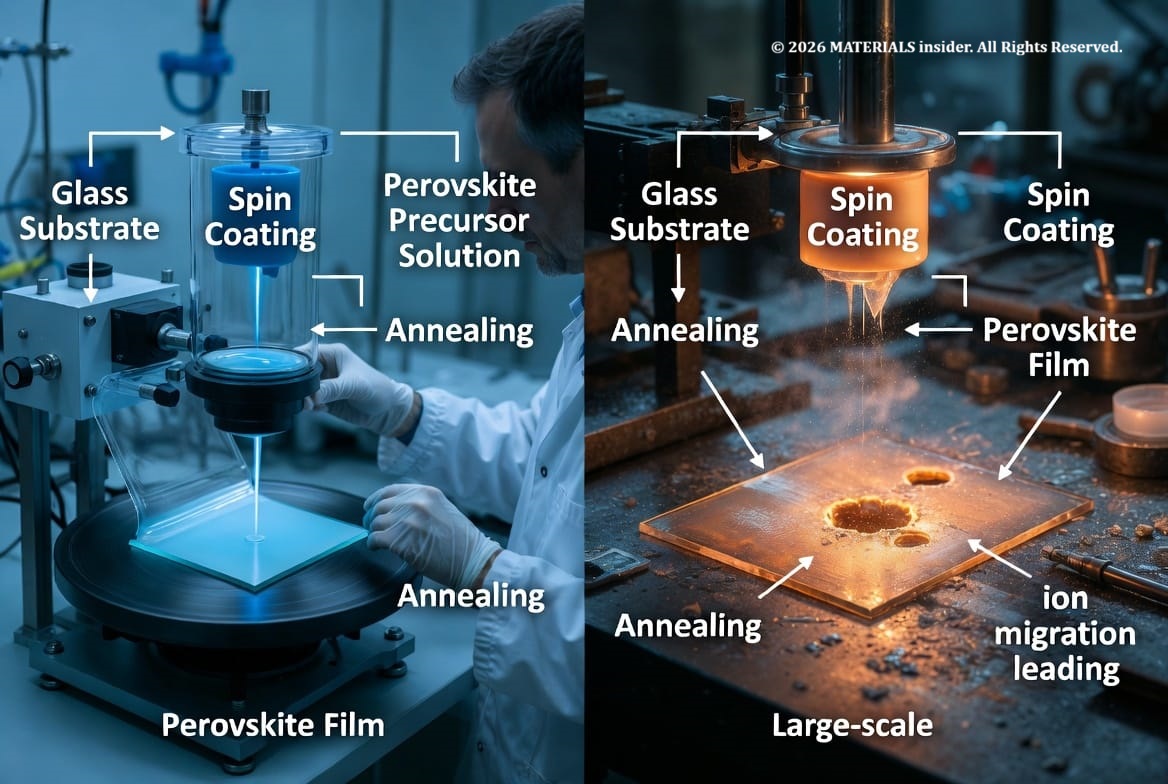
Making Perovskite solar cells is where the struggle gets real. In the lab we spin-coat a liquid precursor, drip some antisolvent, and anneal it and gets nice uniform film. But when scaling up there will be some practical boundries. Such as:
- Solvent dries unevenly → pinholes and mixed crystal phases
- Moisture, heat, or light makes ions start migrating and the good black phase turns into useless yellow junk
- Lead toxicity is still a thing (people are racing for tin or double-perovskite swaps)
- Interfaces with the charge-transport layers have to be almost perfect or electrons just recombine and die
Materials scientists fight back with atomic-level tricks like tiny additives that template perfect crystal growth and mixed cations for stability. And also with surface passivation molecules, and even solvent-free vacuum deposition or roll-to-roll printing in open air. Seed-crystal methods are already pushing vacuum-processed cells over 25% with better lifetime.
Where You’ll Actually See This Stuff:
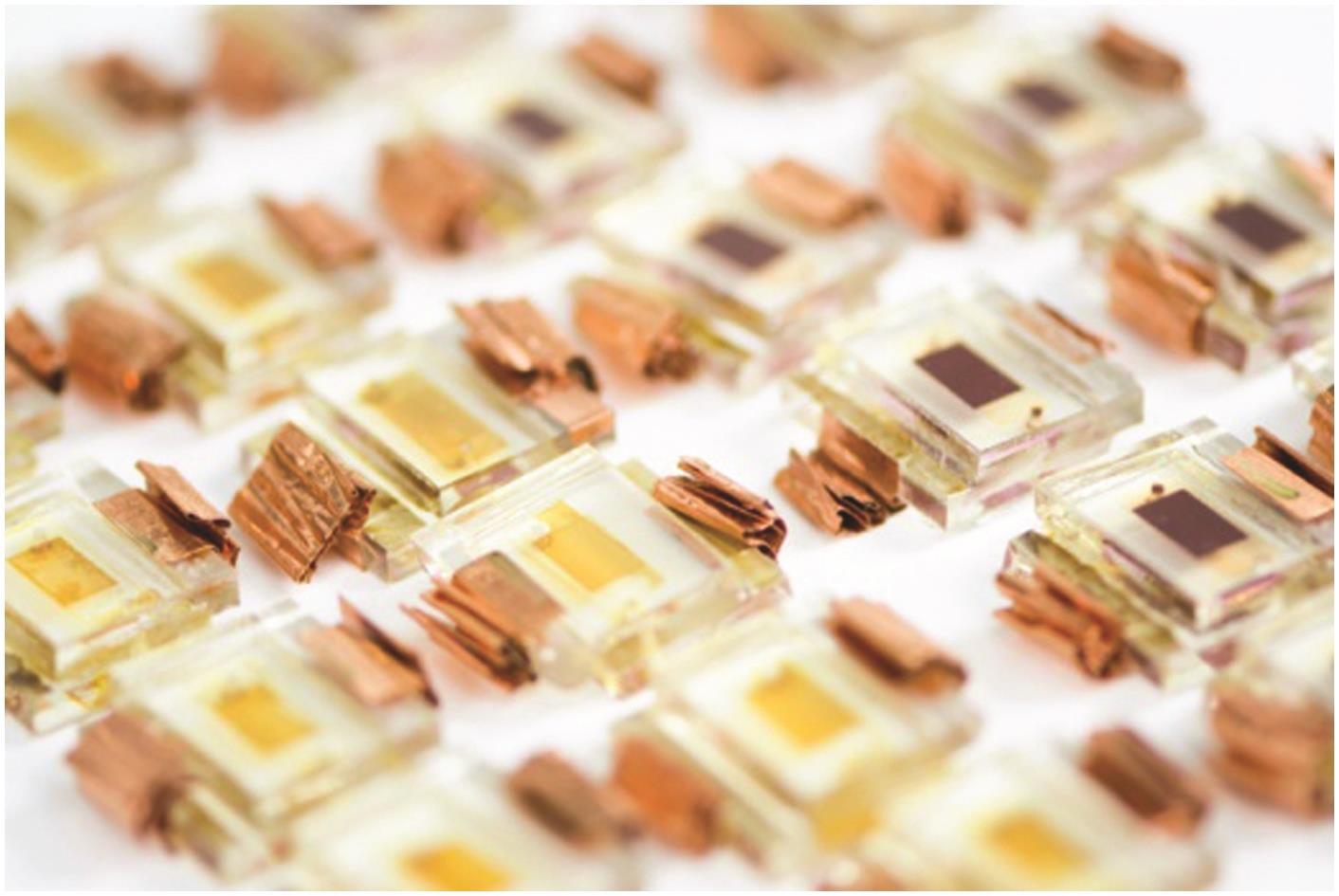
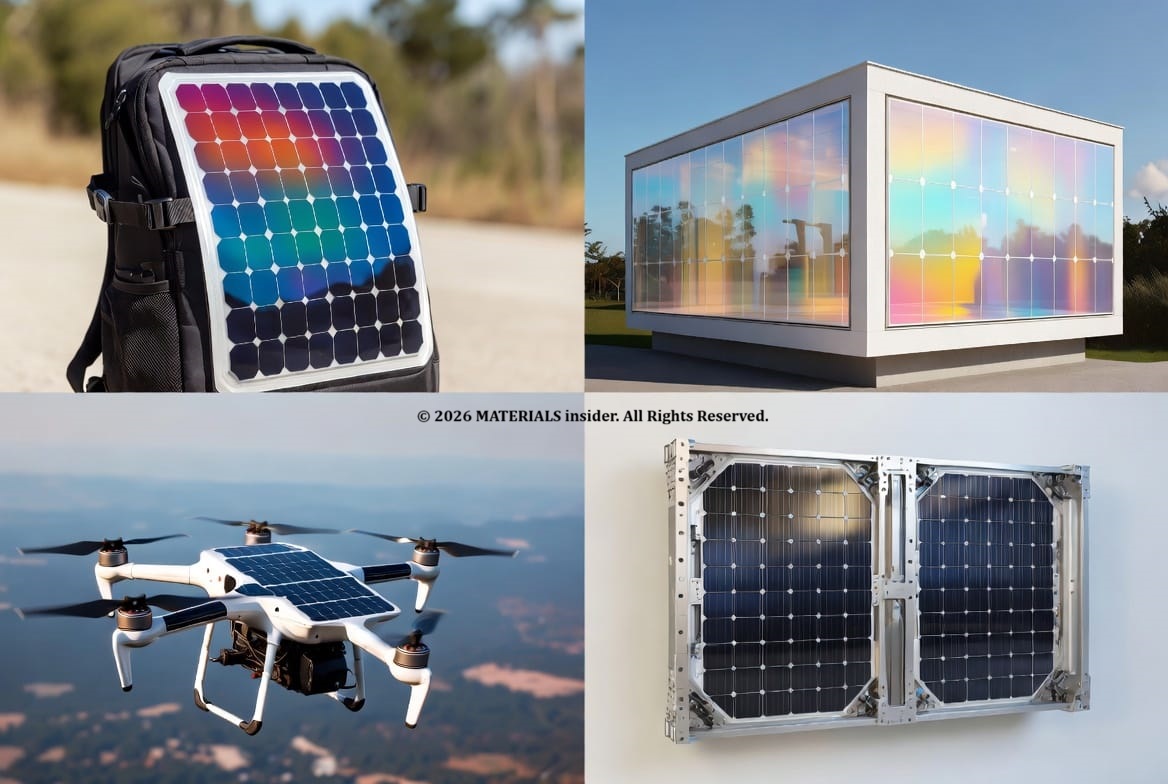
Because you can print perovskites on plastic, glass, or fabric, the applications are wild:
- Flexible backpacks and phone cases that charge themselves
- Semi-transparent windows that generate power for buildings
- Lightweight panels for drones, EVs, and satellites
- Tandem stacks on silicon that push total efficiency past 30%
- Indoor IoT sensors that run forever on office lighting
Pilot factories are already spinning up. Commercial modules are aiming for 18–26% with real warranties as stability data keeps improving.
The Bottom Line:
Perovskite solar cells are peak atomic engineering. By choosing which atoms go where, how soft the lattice is, and how it talks to light and vibrations. Researchers built a material that absorbs light like crazy, separates charges cleanly, and can be made cheap and flexible. Stability and big-area uniformity are still the main things to develop, but the progress is insane for something this young.
Next time you see a thin colorful film making power, remember—it’s not magic. It’s atoms arranged just right. And that, my friends, is how a bunch of scientists in their 20s and 30s are quietly rewriting the rules of solar energy.
Key Original Papers & References:
- Anuruddha, W.A.I., Arush, K.M. & Galhenage, A.S. (2020). Development of Perovskite Structured Materials for Solar Cells. Towards smart society through innovative materials, Dept. of Materials Science & Engineering, University of Moratuwa.
- Kojima, A. et al. (2009). Organometal halide perovskites as visible-light sensitizers for photovoltaic cells. J. Am. Chem. Soc., 131, 6050.
- Kim, H.S. et al. (2012). Lead iodide perovskite sensitized all-solid-state solar cell >9%. Sci. Rep., 2, 591.
- Burschka, J. et al. (2013). Sequential deposition for high-performance perovskite solar cells. Nature, 499, 316.
- Han, J. et al. (2025). Perovskite solar cells. Nat. Rev. Methods Primers, 5, 3.
- Miah, Md & Khandaker, Mayeen & Rahman, Md & Alam, Mohammad Nur-E & Islam, Mohammad. (2024). Band gap tuning of perovskite solar cells for enhancing the efficiency and stability: issues and prospects. RSC Advances. 14. 15876-15906. 10.1039/d4ra01640h.
And also you can find interesting articles about Super conduction materials and shape memory alloys from our site. Just check those out as well.
Share this article: